
Imagine trying to build a house without a blueprint. You might buy high-quality materials and hire experienced people, but without a clear plan, you will likely waste time, overspe…
Why Every Business Needs a Social Media Strategy
Imagine trying to build a house without a blueprint. You might buy high-quality materials and hire experienced people, but without a clear plan, you will likely waste time, overspend, and end up with something that does not meet your needs.
Social media works the same way. Many businesses post whenever they have an idea: a product promotion, a motivational quote, a trending reel, then silence for two weeks. This random approach makes it difficult for your audience to understand your brand and harder for your business to achieve consistent growth.
What Is a Social Media Strategy?
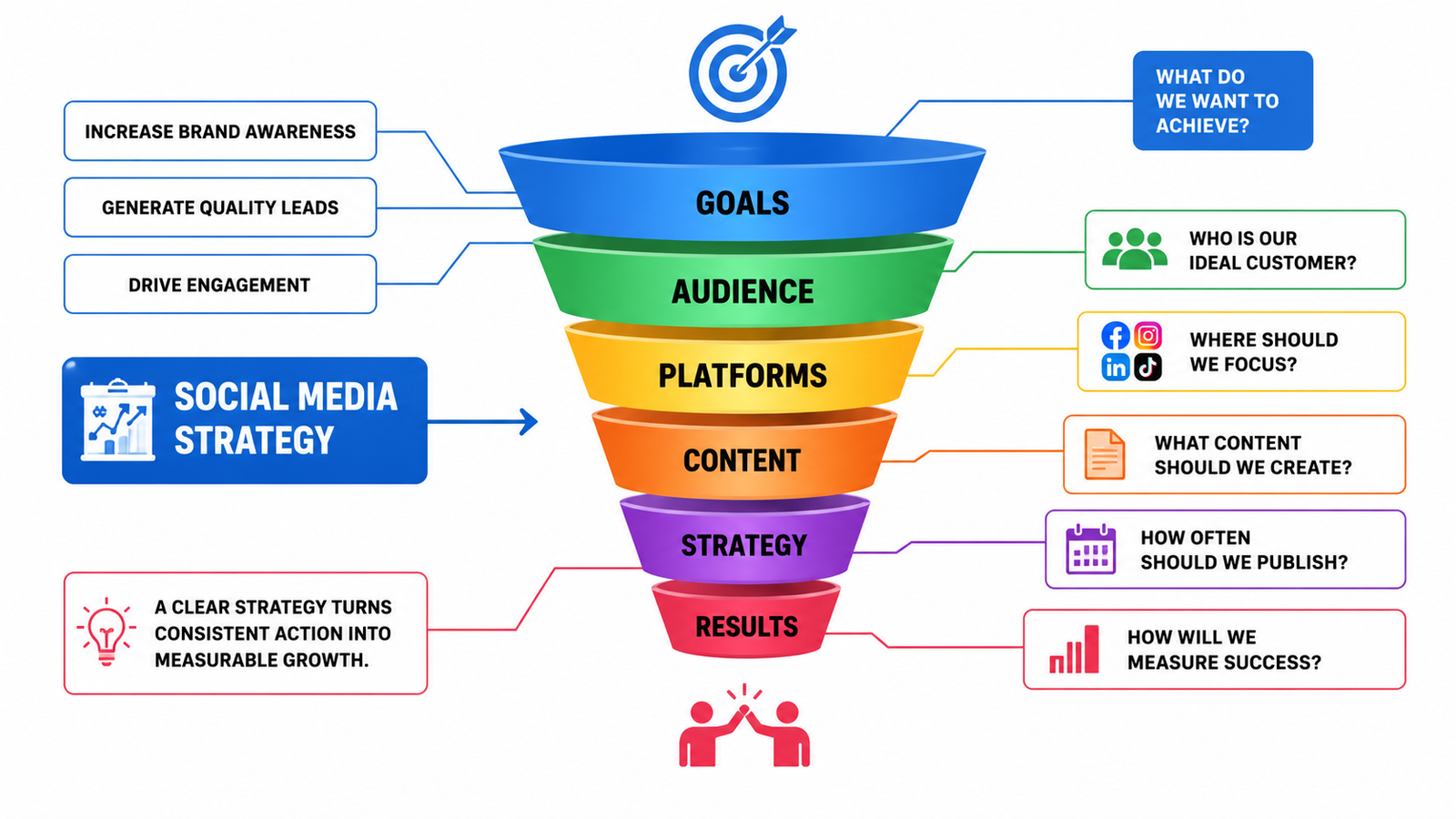
A social media strategy is a documented plan that explains how your business will use social media to achieve specific goals. Rather than posting randomly, it helps you make informed decisions about your audience, content, platforms, messaging, and performance.
A complete strategy should answer practical questions: What are our business goals? Who is our ideal customer? Which platforms should we focus on? What content should we create? How often should we publish? How will we measure success?
Once those questions are answered, content creation becomes much easier because every decision is based on a clear objective instead of guesswork.
Build Your Social Media Strategy in 9 Steps
Define Your Business Goals
Before creating your first post, understand what you are trying to achieve. Likes, followers, and views can be useful, but they should not be the main objective. A restaurant may want more table reservations. A real estate company may want qualified property enquiries. A dental clinic may want appointment bookings. An e-commerce business may want more online sales. A marketing agency may want consultation requests and stronger authority.
Understand Your Target Audience
One of the biggest mistakes businesses make is trying to create content for everyone. Content that tries to appeal to everyone usually connects with no one. Define who your ideal customer is, where they live, what problems they face, what questions they ask before buying, and which platforms they use most. The better you understand your audience, the easier it becomes to create content they want to engage with.
Choose the Right Platforms
You do not need to be active everywhere. Trying to manage too many platforms often creates inconsistent content and weak performance. Focus first on the platforms where your audience spends time.
Best for lifestyle, restaurants, fashion, beauty, healthcare, real estate, and local businesses.
Strong for B2B companies, agencies, consultants, software firms, and recruitment brands.
Useful for local communities, events, healthcare, schools, service businesses, and paid ads.
Effective for younger audiences, creative brands, entertainment, and product-led short videos.
Create Content Pillars
Content pillars are the main topics your business will regularly talk about. They prevent random posting and make your brand easier to recognise. A marketing agency might use pillars such as marketing tips, client success stories, industry news, behind the scenes, team culture, and educational guides. A dental clinic might use patient education, before-and-after results, doctor introductions, oral health tips, testimonials, and common customer questions.
Create a Content Calendar
A content calendar is a schedule of what you will post, when you will post it, and why you are posting it. Planning two to four weeks ahead can make a major difference.
| Monday | Wednesday | Friday |
|---|---|---|
| Educational Tip | Behind the Scenes | Customer Success Story |
| Industry Insight | Team Culture | Promotional Offer |
| Question Post | Case Study | Trending Topic |
The goal is not only to stay consistent. It is to make sure your audience sees a healthy mix of educational, engaging, trust-building, and promotional content.
Build a Consistent Brand Voice
Your brand voice is how your business communicates across captions, videos, comments, stories, replies, ads, and website copy. If your communication changes dramatically from post to post, customers can feel confused. Decide whether your brand should sound professional, conversational, educational, entertaining, formal, or friendly. The right voice depends on your industry, but the important thing is consistency.
Do Not Just Sell. Educate.
Many businesses treat social media like a digital catalogue. Every post says buy now, contact us, limited offer, new product, or book today. Promotional content has its place, but people usually open social media to learn, solve a problem, stay informed, or connect. A balanced strategy includes educational content, trust-building content, behind-the-scenes content, engagement content, and promotional content. Provide value consistently, and the enquiries will follow.
Measure the Right Metrics
Thousands of views feel good, but the real question is whether those views helped your business. Vanity metrics can be encouraging, but they do not always indicate success. Track KPIs that match your goals: reach, impressions, profile visits, comments, shares, saves, website clicks, contact form submissions, WhatsApp enquiries, phone calls, purchases, bookings, consultation requests, and revenue generated.
Review and Improve Every Month
Your first strategy does not need to be perfect. The most effective social media strategies evolve through review. At the end of every month, ask which posts performed best, which topics generated enquiries, which content received the highest engagement, which platform produced the best results, and what can be improved next month.
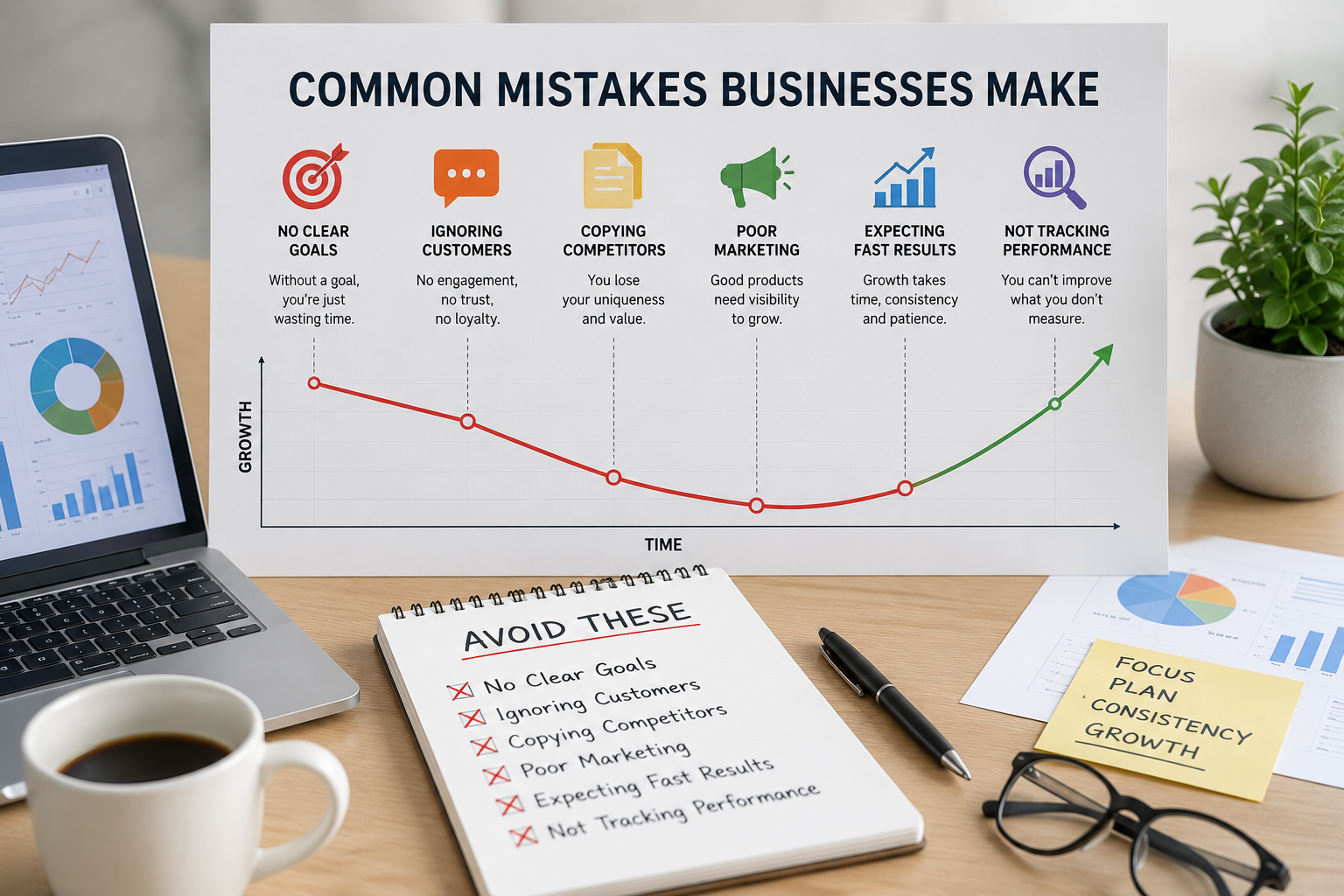
Even businesses with good intentions make mistakes that slow growth on social media. The most common issues are simple, but they can quietly drain time and budget.
Common Mistakes Businesses Make
Posting Without a Goal
If you do not know why you are posting something, your audience probably will not either.
Trying Every Platform
You do not need Instagram, Facebook, LinkedIn, TikTok, YouTube, Pinterest, and Threads all at once.
Copying Competitors
Inspiration is fine. Copying makes it harder to build a brand people remember.
Ignoring Comments
Social media is a conversation. Reply to messages, respond to comments, and build trust.
Expecting Instant Results
One viral video does not build a business. Growth comes from consistency and learning.
Selling Too Often
If every post pushes a sale, people are more likely to scroll past your brand.
Can AI Help With Your Social Media Strategy?
Absolutely. AI can help with brainstorming content ideas, writing first drafts of captions, creating content calendars, researching topics, analysing trends, and repurposing long-form content into short posts.
However, AI should support your strategy, not replace it. Your customers still want authentic stories, real experiences, and genuine human connection. The businesses that combine AI with creativity and industry expertise will have a stronger advantage than those relying on automation alone.
Conclusion
A successful social media strategy is not about posting every day or following every new trend. It is about understanding your audience, setting clear business goals, creating valuable content, and measuring what truly matters.
Remember, social media should support your business, not distract you from it.
If you're just getting started, don't try to perfect everything at once. Build your strategy step by step, stay consistent, analyse your results, and continue improving over time.
The businesses that succeed on social media aren't always the ones with the biggest budgets. They're the ones that have a clear plan and execute it consistently.
If your business already has a strategy but struggles to create content consistently or manage multiple platforms, working with a professional team can save time while helping you achieve better results.
At Adxsway, we help businesses create data-driven social media strategies, produce engaging content, and manage their online presence with long-term growth in mind.
If you'd like to discuss your social media goals, feel free to contact our team.
Frequently Asked Questions
01What is a social media strategy?
A social media strategy is a plan that outlines how your business will use social media to achieve specific goals. It includes your target audience, chosen platforms, content plan, posting schedule, and the metrics you'll use to measure success.
02Why is a social media strategy important?
Without a strategy, businesses often post inconsistently and struggle to achieve meaningful results. A strategy ensures that every post supports your business objectives and provides value to your audience.
03How often should a business post on social media?
There isn't a universal answer. The ideal posting frequency depends on your industry, audience, and available resources. It's better to post consistently with quality content than to post daily without purpose.
04Which social media platform is best for businesses?
The best platform depends on your target audience and business goals. Instagram works well for visual brands and local businesses. LinkedIn is ideal for B2B companies and professional services. Facebook remains valuable for local communities and advertising. TikTok is effective for brands targeting younger audiences. Choose the platforms where your customers are most active.
05What should I post on social media?
A balanced content strategy usually includes educational content, customer success stories, behind-the-scenes content, industry updates, promotional posts, and frequently asked questions. Building content around a few consistent themes makes planning much easier.
06How long does social media marketing take to show results?
Most businesses start seeing meaningful improvements within three to six months, depending on their industry, consistency, content quality, and overall marketing strategy. Social media should be viewed as a long-term investment rather than a quick solution.
07Should every business use paid social media advertising?
Not necessarily. Organic content helps build trust and credibility, while paid advertising can accelerate reach and generate leads more quickly. For many businesses, combining both approaches delivers the best results.
08How do I measure whether my social media strategy is working?
Instead of focusing only on likes and followers, measure metrics that align with your business goals, such as website traffic, enquiries, leads, sales, engagement rate, profile visits, and click-through rate.
09Can AI help with social media marketing?
Yes. AI can assist with idea generation, content planning, caption drafting, research, and performance analysis. However, it should support your strategy rather than replace human creativity and brand authenticity.
10Should I hire a social media marketing agency?
If managing social media is taking time away from running your business, or if you're struggling to achieve consistent results, partnering with an experienced agency can help you develop a strategy, create quality content, and optimise your campaigns.