
One of the biggest reasons businesses struggle with social media isn't because they don't have ideas. It's because they don't have a plan.
One of the biggest reasons businesses struggle with social media isn't because they don't have ideas. It's because they don't have a plan.
Monday arrives, and someone in the office asks, "Do we have anything to post today?" The designer starts waiting for the copy. The copywriter waits for the marketing team. The marketing team waits for approval. Before you know it, it's 6 PM and nothing gets published.
A few days later, someone remembers to post a promotional offer, followed by complete silence for another week.
If this sounds familiar, you're not alone. Many businesses create content only when they have time instead of planning it in advance. That's where a content calendar makes all the difference.
A social media content calendar helps you organise your ideas, maintain consistency, reduce last-minute stress, and ensure every post supports your marketing goals.
In this guide, you'll learn how to create a practical content calendar that keeps your social media organised and your team on the same page.
What Is a Social Media Content Calendar?
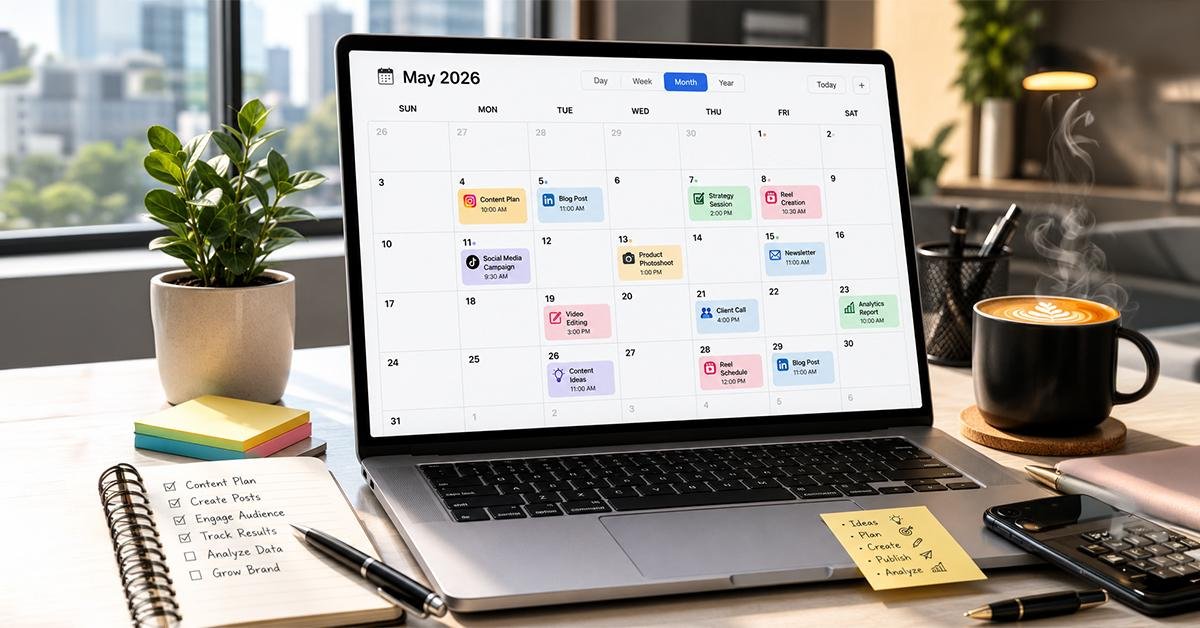
A social media content calendar is a schedule that outlines what you'll post, when you'll post it, where you'll post it, and why you're posting it.
Instead of deciding what to publish every day, you plan your content weeks or even months in advance.
A good content calendar includes:
Publishing date
Social media platform
Content topic
Caption
Visual requirements
Call-to-action
Approval status
Person responsible for publishing
Think of it as your marketing roadmap. Rather than reacting every day, you're working from a structured plan that keeps everyone aligned.
Why Every Business Should Have a Content Calendar
A content calendar isn't just for large companies with marketing teams. Even if you're a small business managing your own social media, planning ahead offers several advantages.
You Stay Consistent
Consistency is one of the biggest factors behind successful social media marketing. When content is planned in advance, you're far less likely to miss posting days or disappear from your audience's feed for weeks at a time.
Your Content Has More Variety
Without planning, businesses often repeat the same type of posts. One week it's all promotional content. The next week it's random motivational quotes. A content calendar helps you maintain a healthy mix of educational, entertaining, trust-building, and promotional content.
Your Team Saves Time
Creating content at the last minute usually leads to unnecessary stress. Planning ahead gives your designer, copywriter, photographer, and marketing team enough time to create better content without rushing.
Campaigns Become Easier to Manage
Whether you're launching a new service, running a seasonal promotion, or planning an event, a content calendar helps you prepare everything in advance instead of scrambling at the last minute.
What to Do Before Creating Your Content Calendar
Before opening Excel, Google Sheets, or your favourite scheduling tool, make sure you've completed two important steps.
Build Your Social Media Strategy
Your calendar should follow your strategy. Without clear business goals and an understanding of your audience, you'll simply be scheduling random content.
Define Your Content Pillars
Your content calendar should be built around your content pillars. These pillars act as the foundation of your monthly planning. Instead of wondering what to post every day, you'll simply choose content from one of your established categories.
How to Create a Social Media Content Calendar Step by Step
Decide How Often You'll Post
One of the first decisions is your posting frequency. Don't choose a schedule that your team can't maintain. It's much better to publish three quality posts every week than seven rushed posts that don't provide value. Start with a realistic schedule based on your available resources. For many businesses, posting three to five times a week is enough to remain active while maintaining quality.
Plan Your Content One Month at a Time
Planning an entire year can feel overwhelming. Instead, focus on one month at a time. Start by marking important dates such as: Public holidays, Industry events, Product launches, Seasonal campaigns, Company anniversaries, Special offers.
Then fill the remaining days with content based on your content pillars. This approach keeps your content balanced while allowing flexibility for trending topics or unexpected opportunities.
Follow a Balanced Content Mix
One of the biggest mistakes businesses make is posting only promotional content. Instead, aim for a healthy balance. For example:
Teach your audience something useful.
Share testimonials, case studies, client success stories, and behind-the-scenes content.
Ask questions, create polls, encourage discussions, or share relatable content.
Promote your products, services, offers, or events.
People follow brands that consistently provide value. Sales naturally become easier when trust has already been established.
Plan Content Around Your Business Goals
One mistake many businesses make is planning content without thinking about what they're trying to achieve. Every post should support at least one business objective. For example:
Educational tips, industry insights, behind-the-scenes videos, trending topics, company culture.
Frequently asked questions, client case studies, testimonials, service explanations, problem-solving content.
Product demonstrations, offers, customer success stories, limited-time promotions, calls to action.
When your content calendar aligns with your business goals, every post has a purpose instead of simply filling a space on the calendar.
Prepare Your Content in Advance
The biggest advantage of using a content calendar is that you can prepare everything before the posting date. Instead of designing today's post today, prepare next week's content this week. A simple workflow could look like this:
| Week 1 | Week 2 | Week 3 | Week 4 |
|---|---|---|---|
| Brainstorm content ideas, decide the topics, write captions | Design graphics, record videos, collect images | Review content, get approvals, schedule posts | Publish content, monitor performance, plan improvements for next month |
This workflow reduces last-minute stress and gives your team enough time to create better-quality content.
Leave Room for Trending Content
A common mistake is filling every day of the month with scheduled posts. While planning is important, social media changes quickly. Industry news, viral trends, customer questions, or major events can create opportunities to publish timely content. Leave a few flexible days each month. These can be used for: Breaking industry news, trending topics, company achievements, event coverage, customer success stories, unexpected announcements.
A good content calendar provides structure without limiting creativity.
Review Your Calendar Every Month
A content calendar shouldn't stay the same forever. At the end of every month, review your performance. Ask questions like: Which posts received the highest engagement? Which topics generated the most enquiries? Which platform performed best? Which content received the most saves and shares? What type of content should we create more often?
Use this information when planning the following month's calendar. Over time, your calendar becomes smarter because it's based on real data rather than assumptions.
Recommended Tools for Managing a Content Calendar
You don't need expensive software to stay organised. Many businesses successfully manage their content using simple tools. Popular options include:
Google Sheets
Microsoft Excel
Google Calendar
Notion
Trello
ClickUp
Asana
Monday.com
If you're working with a larger team, project management tools can help assign responsibilities, manage approvals, and track deadlines more efficiently. Choose a system your team is comfortable using. The best tool is the one your team will actually update consistently.
Common Content Calendar Mistakes
Planning Too Far Ahead
Planning six months in advance sounds organised, but social media changes quickly. Focus on creating a detailed monthly calendar instead.
Posting Only Promotional Content
Your audience doesn't want to see sales posts every day. Mix educational, entertaining, trust-building, and promotional content throughout the month.
Ignoring Business Events
Don't forget to include product launches, company milestones, public holidays, industry events, and seasonal campaigns. These dates often create valuable content opportunities.
Not Assigning Responsibilities
If nobody knows who's writing captions, designing graphics, or publishing posts, deadlines are easily missed. Clearly assign tasks to avoid confusion.
Final Thoughts
A social media content calendar isn't about making your marketing more complicated. It's about making it more organised.
When you plan ahead, your team spends less time deciding what to post and more time creating content that delivers results.
Instead of reacting every day, you'll work with a clear plan that supports your business goals, keeps your audience engaged, and makes your marketing more consistent.
If planning, creating, and managing content every month feels overwhelming, our Social Media Management Services can help you build a structured content plan while your team focuses on running the business.
Frequently Asked Questions
01What is a social media content calendar?
A social media content calendar is a schedule that helps businesses plan what content they'll publish, when they'll publish it, and on which platform. It keeps content organised and ensures consistent posting.
02Why is a content calendar important?
A content calendar helps businesses stay consistent, save time, reduce last-minute stress, and create a balanced mix of educational, engaging, and promotional content.
03How far in advance should I plan my social media content?
For most businesses, planning one month ahead is ideal. It provides enough structure while still allowing flexibility for trends, news, and unexpected opportunities.
04How often should I update my content calendar?
Review and update your calendar every month based on your content performance, business goals, and upcoming campaigns.
05What should be included in a content calendar?
A complete content calendar should include: publishing date, platform, content topic, caption, creative requirements, call-to-action, approval status, and person responsible.
06What's the difference between a content calendar and a content strategy?
A content strategy defines why you're creating content and what business goals you're trying to achieve. A content calendar defines when and where that content will be published.
07Can small businesses benefit from a content calendar?
Absolutely. Even if you're managing your own social media, a content calendar helps you stay organised, maintain consistency, and avoid running out of ideas.
08Which tools are best for creating a content calendar?
Popular options include Google Sheets, Excel, Notion, ClickUp, Trello, Asana, and dedicated social media scheduling tools. Choose the one that best fits your workflow.
09Should every post be promotional?
No. A successful content calendar includes educational, trust-building, engagement, and promotional content. Constantly selling can reduce engagement and weaken audience trust.
10Can I automate my content calendar?
Yes. Many scheduling tools allow you to plan and automatically publish posts in advance. However, it's still important to monitor engagement and respond to comments and messages regularly.
Ready to Build a More Consistent Social Media Strategy?
Let's create a content calendar and strategy that keeps your brand consistent and your team stress-free.
Book A Consultation